ISTP SB RAS

Skip to main content

Author: Ирина Полонская

Gorky Film Studio Producing Documentary about Solar Researchers

Completion is planned for late 2025.

Gorky Film Studio, part the Moscow Film Cluster, is creating a feature-length popular science film called "Sluzhba Solntsa” (Solar Patrol Service).According to the Guild of Non-Fiction Cinema and Television website. shooting took place in Buryatia and Irkutsk Region. The main characters will be prominent Russian scientists who have dedicated their lives to studying the Sun. 

ISTP SB RAS Administration informs about ongoing work at the site intended for constructing a Data Center

Viktor Aleshkov, Deputy Director of the Institute of Solar-Terrestrial Physics SB RAS, outlined current activities at the site designated for building the new Data Center—part of the NGK RAS megaproject ("National Heliogeophysical Complex"). These clarifications followed protests by Akademgorodok residents concerned with deforestation at the construction site.

ISTP SB RAS and Shandong University Agree on Research in Solar Radio Astronomy

The Institute of Solar-Terrestrial Physics SB RAS and the Institute of Space Science of Shandong University (PRC) have signed an agreement for joint research in solar radio astronomy. The document was signed by Dr. Andrey Medvedev, Corresponding Member of the Russian Academy of Sciences and Director of ISTP SB RAS, and Prof. Yao Chen, Executive Director of the Institute of Space Science.

Documentary explores the story behind ISTP SB RAS and its ambitious initiative - National Heliogeophysical Complex of RAS

A renowned Russian blogger Pavel Stepanov has made a film about ISTP SB RAS and their brainchild – the National Heliogeophysical Complex of RAS, whose facilities are currently under construction in Buryatia and Irkutsk region.
As the author notes on his TG channel https://t.me/stepanovnm/5005, "thanks to the implementation of this project, the Tunka Valley is turning into a scientific center – research of the Sun and solar-terrestrial relations using cutting-edge instruments will be launched here. And we'll show you how it all happens."

Available now on YouTube

Huge telescope at Lake Baikal. How scientists from RAS have transformed the Tunka Valley into a space exploration hub — view online in HD quality (video from Pavel Stepanov posted on October 27, 2025 at 5:39:32 00:35:40).

ISTP SB RAS and Banzarov Buryat State University collaborate to engage students, schoolchildren, and educators

Work has begun under the cooperation agreement between Dorzhi Banzarov Buryat State University and the Institute of Solar-Terrestrial Physics SB RAS. It should be recalled that the agreement was signed on May 5, 2025. The document was signed by Aldar Damdinov, Rector of BSU, and Andrey Medvedev, Director of ISTP SB RAS.

Лидар, который будет построен в рамках НГК РАН, не имеет аналогов в мире

The Institute of Solar-Terrestrial Physics SB RAS has obtained a positive assessment from Glavgosexpertiza of Russia for its Lidar construction project. The document was issued following state expert reviews of engineering survey outcomes. Seismic resistance up to 8.4 magnitude has been considered during planning stages. The Facility will be constructed within the framework of the expanded investment project "National Heliogeophysical Complex of RAS (NHC RAS). It aims at researching lower and upper atmospheric layers. Completion of the construction is scheduled for 2030.

As reported by Alexander Beletsky, Candidate of Physical and Mathematical Sciences, Head of Atmospheric Physics Laboratory at ISTP SB RAS, the lidar project was developed jointly with the Zuev Institute of Atmospheric Optics SB RAS (Tomsk). Work on the project commenced in 2007. Scientists from Tomsk possess extensive expertise in utilizing lidar technologies. The Institute of Atmospheric Optics maintains an array of diverse, self-designed lidars, among which is one fitted with a three-meter mirror situated at the Siberian Lidar Station. Researchers from Irkutsk are more focused on exploring the upper layers of the atmosphere (above 50 km), including the study of ground-level atmospheric effects on higher layers, while their colleagues from Tomsk concentrate on analyzing the lower atmospheric layers.

The equipment complex will be constructed in Kharkita locality (Olkhon district, Irkutsk region). It will comprise a high-altitude lidar engineered to measure atmospheric parameters across altitudes ranging from 10 to 500 km, and a tropospheric lidar specifically tailored for investigating the lower layers of the atmosphere. Currently, no similar lidar complexes exist elsewhere worldwide. The main equipment includes an optical system, a set of powerful lasers, a sensitive receiving system with noise suppression, and data processing facilities.

The foundation of the future lidar complex is separated from the external shell where a sliding dome will be placed so that wind loads are not transferred onto the instrumentation. The tower housing mirrors of the high-altitude lidar will stand a 12-meter height. A sliding roof structure will protect the mirrors from dust contamination and precipitation.

The optical system of the high-altitude lidar will comprise one transmitting and six receiving mirrors. The aperture of the receiving mirrors will amount to approximately 7 square meters, and the transmitting mirror diameter will reach 1 meter. According to specifications, the optical system can tilt up to 35 degrees off zenith.

The transmitting mirror is to emit laser radiation into the atmosphere using several lasers for different spectral ranges, which work at different heights and with diverse atmospheric constituents. Return radiation arrives at the matrix of receiving mirrors, then, data is accumulated on receiving equipment. As result, researchers obtain height profiles of atmospheric constituent densities, temperature, and wind. Data from this high-altitude lidar will assist scientists in studying atmospheric photochemistry, climate changes, interactions between neutral and charged components of the atmosphere, occurrence and dynamics of sporadic ionospheric layers, stratospheric aerosos, and ozone content in the atmosphere.

“The tropospheric lidar will be equipped with a separate dome allowing it to observe angles from 0 to 90 degrees off zenith and 360 degrees azimuthally. Mirrors of this lidar will have smaller diameters compared to those of the high-altitude lidar. Tropospheric lidar focuses primarily on Lake Baikal's ecology research, behavior of near-surface atmosphere in high-land regions, and aerosol transport,” explained Alexander Beletsky.

According to the project plan, when the instrument is put into operation, scientific duty shifts will be arranged at the lidar complex, leading either to expansion of the staff of the Atmospheric Physics Laboratory or establishment of a specialized joint laboratory.

Note:

-The first phase of the NHC RAS project involved constructing a Complex of Optical Instruments in Tory settlement (Buryatia), a Multi-wave Radioheliograph in Badary settlement (Buryatia), and developing a design for a large solar telescope-coronagraph equipped with a three-meter mirror.

-Building upon these achievements, the second phase focuses on constructing a lidar and a radar complex at Maloye More strait (Lake Baikal), a heating facility near Angarsk (Odinsk), and a data center in Irkutsk.

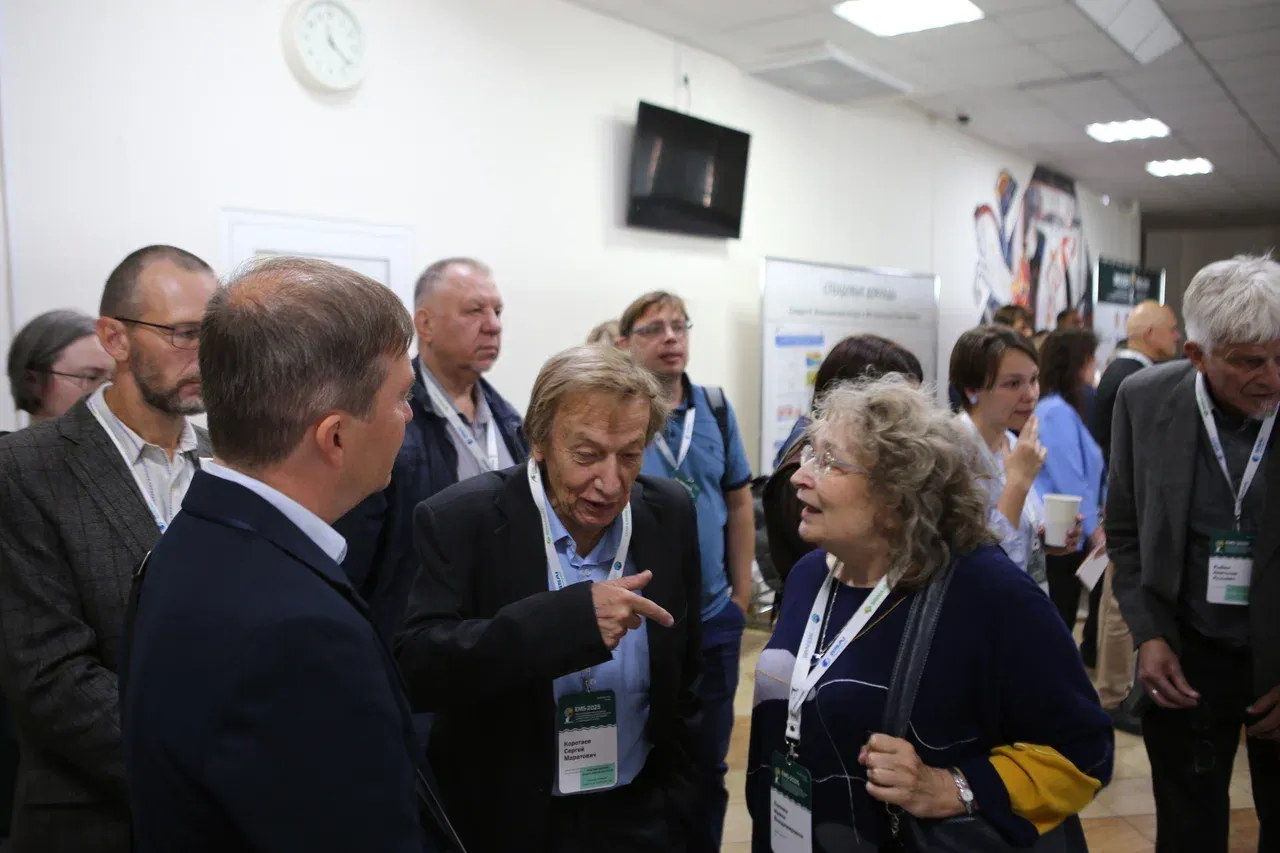
The IX All-Russian School-Workshop on Electromagnetic Sounding of the Earth Underway in Irkutsk

The IX All-Russian School-Workshop on Electromagnetic Sounding of the Earth named in honor of M.N. Berdichevsky, L.L. Vanyan and V.I. Dmitriev is being held in Irkutsk and will conclude its work on September 14th. The School-Workshop focuses on issues and results related to studying and measuring electromagnetic (EM) fields, which provide a wide range of information—from solving engineering problems, searching for oil and gas to predicting earthquakes and space weather.

The IX All-Russian School-Workshop on Electromagnetic Sounding of the Earth to be held in Irkutsk on September 8–14

The 9th All-Russian School-Workshop on Electromagnetic Sounding of the Earth named in honor of M.N. Berdichevsky, L.L. Vanyan and V.I. Dmitriev will take place in Irkutsk on September 8–14. The chairman of the Program Committee is Alexei Kuvshinov, leading researcher at the Institute of Solar-Terrestrial Physics SB RAS, professor at Zurich Technical University, Doctor of Sciences in Physics and Mathematics. Honorary Presidium of the School-Workshop is led by Russian Academicians in Geophysics M.I. Epov, A.D. Gvishiani, and the President of Mongolian Academy of Sciences Academician S. Demberel.

ISTP SB RAS administration inspects the construction progress of the Large Solar Telescope

Administration of the Institute of Solar-Terrestrial Physics SB RAS has inspected the construction process of the Large Solar Telescope equipped with a 3-meter diameter mirror (LST-3). The cutting-edge facility is being built within the Sayan Solar Observatory near Mondy settlement in the Republic of Buryatia as an integral component of the National Heliogeophysical Complex project of the Russian Academy of Sciences.

ISTP SB RAS Receives Approval from Glavgosexpertiza for Heating Facility Construction Project

The Institute of Solar-Terrestrial Physics SB RAS has received a positive assessment from Glavgosexpertiza of Russia for its Heating Facility construction project. The document is issued after successful completion of state expert reviews related to engineering surveys. The Facility is an integral component of the National Heliogeophysical Complex (NHC RAS) project, designed specifically for investigating Earth's ionosphere, upper atmosphere, and geospace. According to plans, the construction is scheduled for completion in 2030.

25th All-Russian Radio Astronomy Conference Commences its Work at ISTP SB RAS

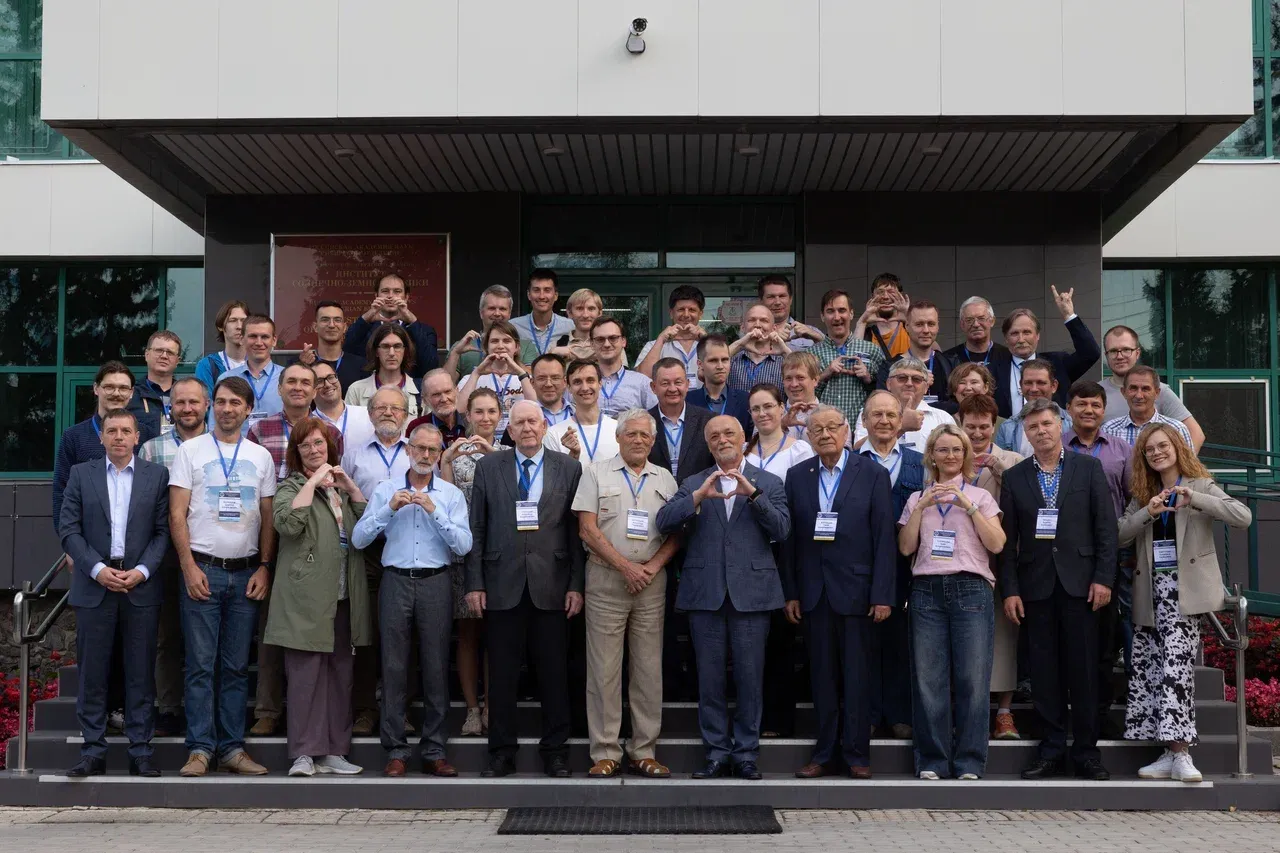
The 25th All-Russian Radio Astronomy Conference “Radio Astronomy Equipment and Methods” has begun its sessions at the Institute of Solar-Terrestrial Physics SB RAS. This is the first time the institute hosts this recurring event. Coordinating the conference are the Ministry of Science and Higher Education of the Russian Federation, the Scientific Council of the Russian Academy of Sciences for the problem “Positioning, Navigation and Timing Services”, the Scientific Council of the Department of Physical Sciences of RAS on Astronomy and the Institute of Applied Astronomy of RAS.

25th All-Russian Radio Astronomy Conference to be Held at ISTP SB RAS on 18–22 August

The 25th All-Russian Radio Astronomy Conference “Radio Astronomy Equipment and Methods” will take place at the Institute of Solar-Terrestrial Physics SB RAS on 18–22 August. As reported by Sergey Lesovoi, Deputy Director for Scientific Research Work at ISTP SB RAS, this conference is typically held by the Institute of Applied Astronomy of RAS (St. Petersburg), and it will be the first time that Irkutsk-based researchers welcome such a prominent group of specialists dedicated to radio astronomical instrumentation. Other organizers include the Ministry of Science and Higher Education of the Russian Federation, the Scientific Council of the Russian Academy of Sciences for the problem “Positioning, Navigation and Timing Services”, the Scientific Council of the Department of Physical Sciences of RAS on Astronomy, and IAA RAS.

en_USEN