The Institute actively cooperates with leading Russian scientific and educational entities, state corporations, joint-stock companies, and cultural institutions in the fields of science, education, and outreach activities. We strive to enhance national scientific capabilities in the field of solar-terrestrial couplings through joint fundamental, exploratory, and applied research, implementation of advanced technologies, and training of highly-skilled scientific personnel.
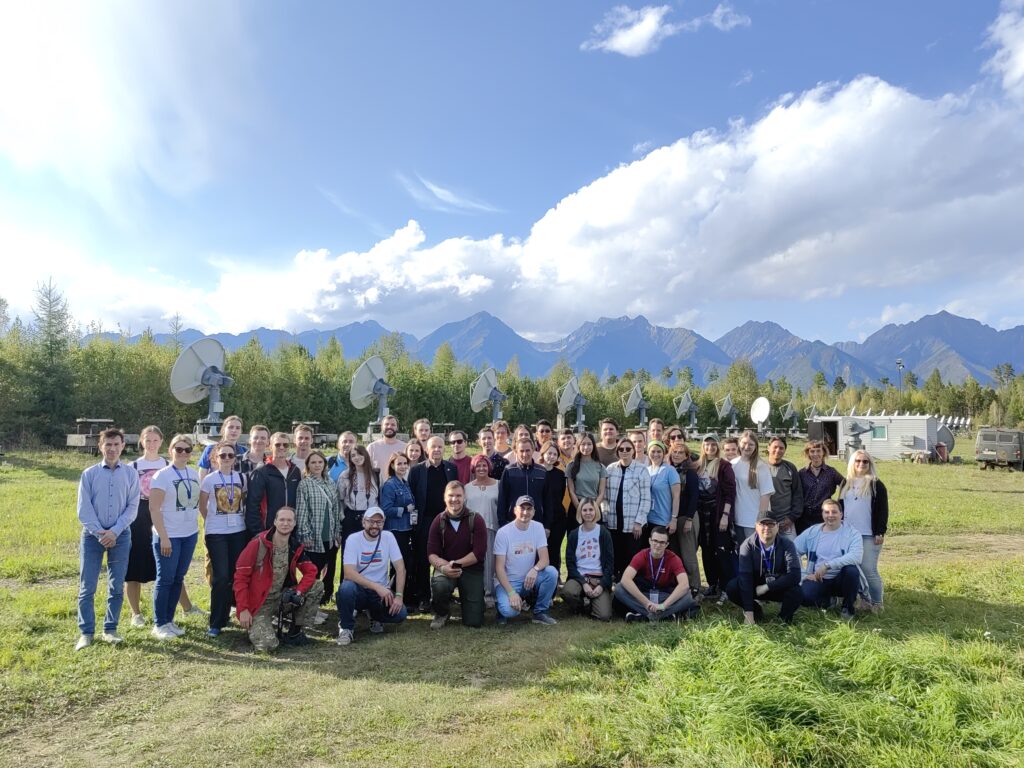
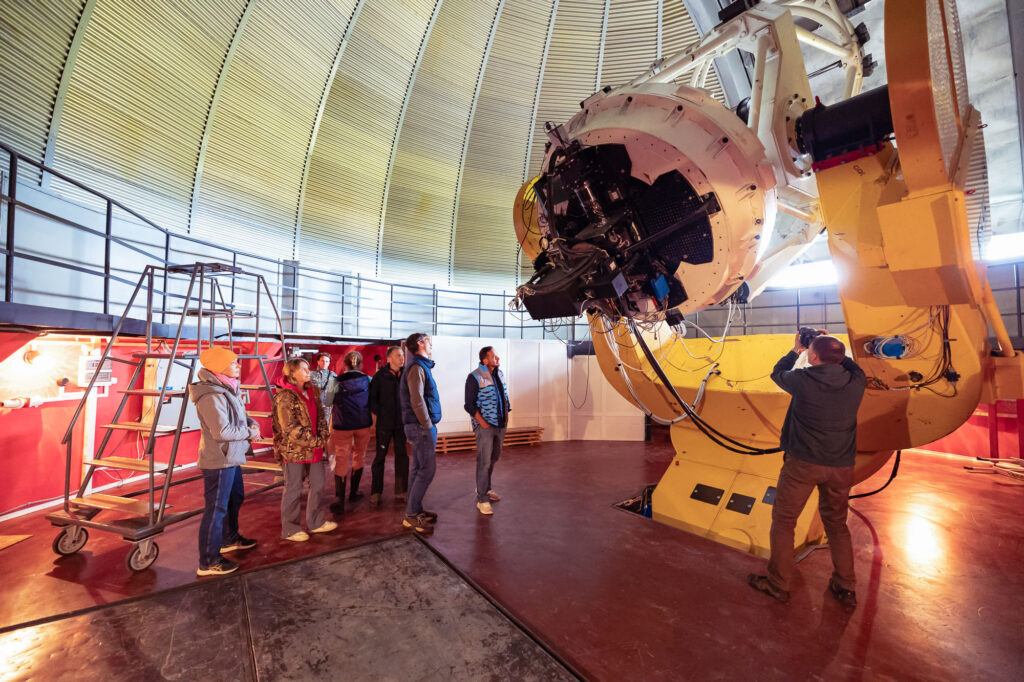
The Institute is committed to promoting scientific awareness, particularly through organized tours to our observatories situated in scenic locations of Lake Baikal—spanning Irkutsk Region and Buryatia Republic, including Tunka Valley.
Core Areas of Cooperation:
— basic and applied research aligned with priority directions of Russia's scientific and technological development;
— design, development, and fabrication of unique scientific facilities and instrumentation for monitoring near-Earth space, solar activity, and predicting space weather;
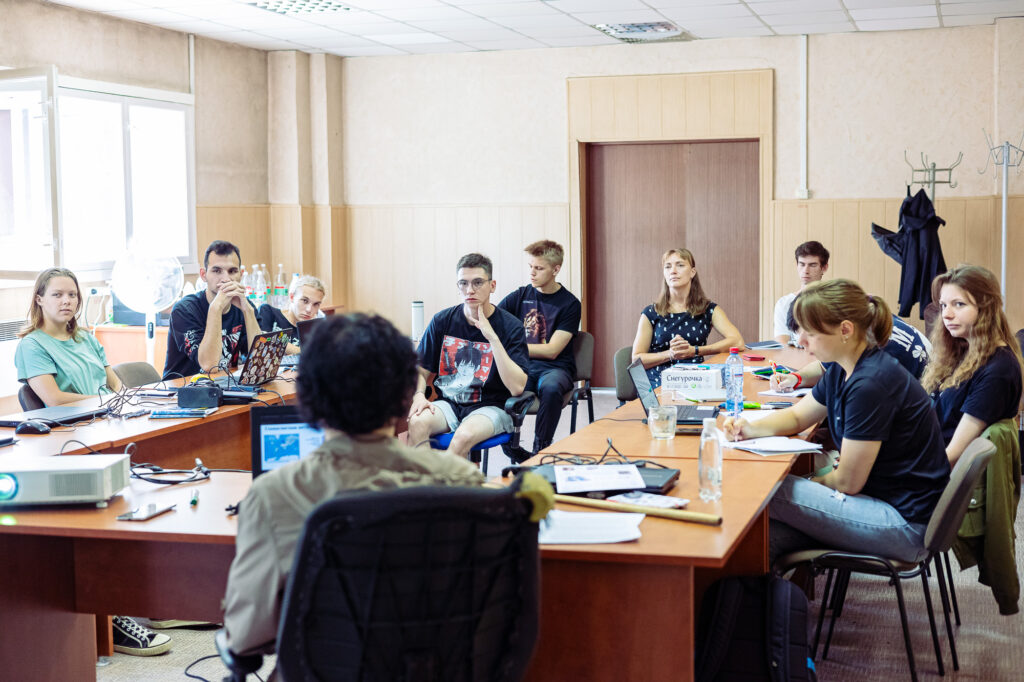
— organizing and hosting scientific conferences, seminars, youth schools focusing on Institute-specific themes;
— implementing space experiments aboard small spacecraft;
— all stages of scientific data lifecycle;
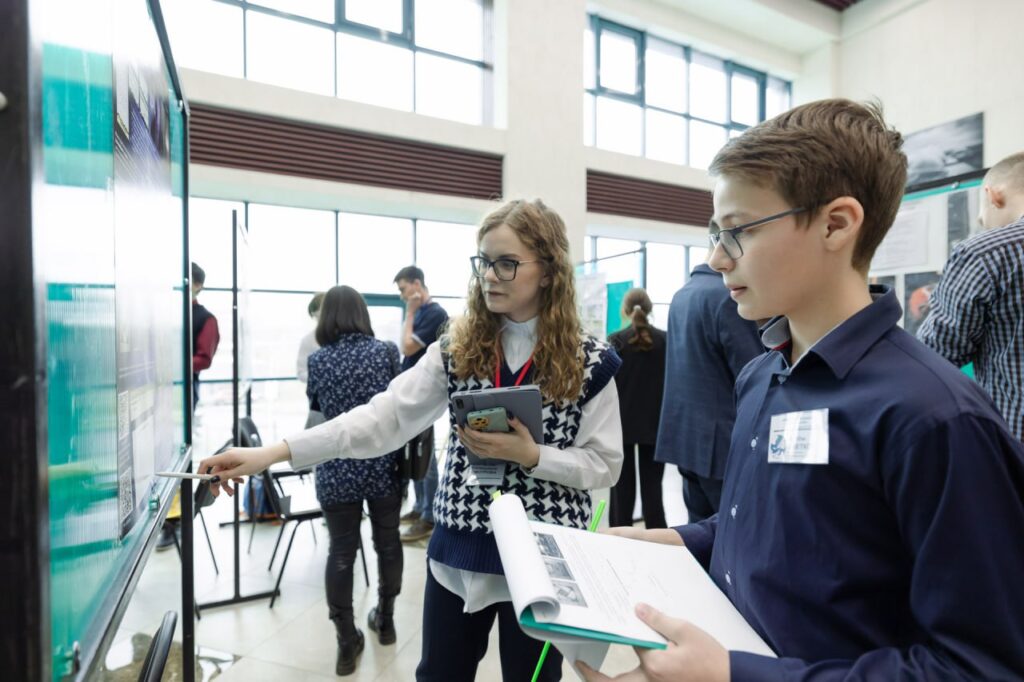
— educational programs, internships, and hands-on research experiences for schoolchildren, young scientists, and students at utilizing unique infrastructure at ISTP SB RAS observatories.
Key partners:
— Avialesookhrana (Irkutsk Base of Aerial Forest Protection Service). Utilizing data from a lightning location network developed by ISTP SB RAS and INRTU to enable early-stage identification and precise localization of forest fires, particularly those ignited by thunderstorm activity.
— Arctic and Antarctic Research Institute (AARI). Conducting a collaborative interdisciplinary study on the dynamics of the ionosphere across middle and high latitudes in the Northern Hemisphere under quiet and disturbed conditions using multi-instrument observational data.
— Buryat State University named after D.Banzarov (BSU). As part of cooperation, we engage with schoolchildren, students, and educators from Buryatia. Educators from ISTP SB RAS deliver lectures on physics and astronomy for secondary-level learners. Undergraduate students from universities can embark on field-based academic training at the ISTP Geophysical Observatory situated in Tory settlement. Physics teachers from educational institutions throughout Buryat Republic attend professional development courses.
— State Corporation Rostec. Collaboration focuses on creation of unique scientific equipment for the integrated investment project "National Heliogeophysical Complex of RAS", a megascience -class initiative aimed at proactive development of research in the field of solar physics and near-Earth space physics. As part of constructing facilities for this complex, where the Institute acts as the customer, a cooperation of Russian enterprises was formed under the leadership of Rostec State Corporation.
— State Corporation Roscosmos. In the context of providing information support for the Automated Warning System on Hazardous Situations in Near-Earth Space (ASPOS OKP), regular observations of artificial space objects and space debris are conducted using the AZT-33IK and AZT-33VM telescopes at the Sayan Observatory of the Institute. Based on ASPOS OKP data, collision avoidance maneuvers are executed several times annually to prevent potential ISS collisions with space debris, thereby safeguarding the unique space complex and ensuring the safety and well-being of its crew members.
Ground-based support is provided for the scientific observation program of the X-ray Orbital Observatory "Spektr-RG," which seeks to address fundamental astrophysical questions, including how galaxy clusters evolved over the lifetime of the Universe. For instance, using the Institute’s 1.6-meter AZT-33IK telescope, researchers recently identified a previously undiscovered distant quasar at z=4.116 in the Lockman Hole region, a small area of sky where absorption of X-rays by interstellar gas and dust in our Galaxy is minimal, and least hinders observations of extragalactic objects.
— Space Research Institute (IKI). Joint laboratory of Solar Astronomy and Heliophysics Instrumentation of IKI and ISTP SB RAS provides daily operational information and forecasts on space weather (magnetic storms, auroras, solar wind, etc.). In 2023, scientists from ISTP SB RAS, IKI, Novosibirsk State University, and the Institute for Physics of Microstructures RAS created the world's most compact space telescope SOL for solar observations in UV range.
— Y.G. Shafer Institute of Cosmophysical Research and Aeronomy SB RAS (SHICRA). Collaboration includes studying spatiotemporal evolution of cosmic noise absorption at subauroral latitudes through multi-station riometer observations. Additionally, comprehensive research on the dynamics of mid-latitude and high-latitude ionosphere in the Northern Hemisphere under quiet and disturbed conditions is conducted based on analysis of multi-instrument observations.
— A.A. Trofimuk Institute of Petroleum Geology and Geophysics SB RAS (IPGG SB RAS). Continuous monitoring of the ionosphere is organized in collaboration with IPGG SB RAS and the Institute of Cosmophysical Research and Radio Wave Propagation Far Eastern Branch RAS (IKIR FEB RAS) using vertical, near-vertical, and oblique incidence sounding techniques across Russia's Asian region. For ionosphere sounding, a custom-built digital chirp ionosonde is used that was manufactured at ISTP SB RAS upon order from IPGG SB RAS. The instrument data is used to predict ionospheric conditions and radiowave propagation, and to predict the so called ionospheric weather.
— V.E. Zuev Institute of Atmospheric Optics SB RAS (IAO SB RAS). Collaborative research includes adaptive optics, meteorology, atmospheric turbulence monitoring. An annual International Symposium "Atmospheric and Ocean Optics. Atmospheric Physics” is held, co-organized by IAO SB RAS, ISTP SB RAS, and other specialized scientific institutes.
— I.I. Molchanov-Sibirsky Irkutsk Regional Universal Scientific Library. ISTP SB RAS experts, including young researchers, regularly deliver public lectures at the library intended for broad audiences. These events aim to disseminate, advance, and safeguard trustworthy scientific knowledge across the region.
— Irkutsk State University (ISU). Many scientists from ISTP SB RAS teach at ISU delivering lectures, conducting seminars, organizing expeditions. Students annually complete their internships at the Institute's observatories; participate in scientific retreats held as part of the International Baikal School on Fundamental Physics and Young Scientists' Conference. Cooperation with the Chair of General and Space Physics and the Chair of Radiophysics involves additional specialized courses of study, supervision of final-year and diploma projects. Furthermore, ISU and ISTP SB RAS frequently organize collaborative events, conferences, and schools, like the annual conference for schoolchildren "Man and Space".
— Kazan Federal University (KFU). Collaboration projects encompass digital registration of GNSS data and processing methods, mutual calibration of scientific instruments, joint research efforts in geophysics and geodynamics.
— Lomonosov Moscow State University (MSU). Coordination and execution of cooperative scientific activities, such as the International Baikal School on Fundamental Physics, hands-on research projects and internships for students, collaborative studies of near-Earth space.
— Educational Complex "Point of Future". Joint initiatives to engage children and teenagers in scientific activities through visits to ISTP SB RAS observatories, popular science lectures on physics and astronomy, and participation in educational events.
— Astrospace Centre of P.N. Lebedev Physical Institute of RAS (ISC LPI). Together with ISC LPI, Institute of Astronomy of RAS, and Special Astrophysical Observatory of RAS, investigation into the atmosphere over the Sayan Solar Observatory and Khulugaisha Mountain is conducted to determine suitability of these locations for placing a SubTHz Telescope. Field measurements rely on air humidity characteristics and atmospheric optical thickness readings taken with MIAP-2 radiometer.
Institute’s Developments:
ISTP SB RAS develops several promising research directions focused on creating effective technologies that capture interest among specialists and scientists across different fields of knowledge. Among important results achieved over recent years are the following:
— specific features of how space weather affects global navigation satellite systems (GLONASS, GPS), widely utilized in various sectors of economic activity, have been identified;
— a lightning detection network has been developed and deployed, which can be used as an auxiliary tool for monitoring and warning against hazardous phenomena associated with atmospheric electrical discharges and heavy precipitation in regions lacking sufficient numbers of meteorological stations. This information benefit forestry protection services, energy providers, road maintenance companies, etc., enabling them to prevent damage to power grids and transportation infrastructure;
— key aspects of how space weather influences terrestrial transport systems have been revealed, particularly geomagnetically induced currents in grounded long-distance power lines, which can benefit electric utilities involved in electricity transmission networks (power lines) and oil/gas pipeline operators;
— continuous monitoring of Earth's magnetic field, ionosphere, and quality of radio wave propagation across Russia is being carried out;
— models describing solar activity cycles have been developed;
— methods based on machine learning and neural network have been advanced for diagnosing and predicting characteristics of various atmospheric layers applicable to astronomical telescopes. Deep learning models have been adapted for short-term local weather prediction.
Various economic entities, including those operating in northern and polar regions of the country, are potential users of predictive data on geomagnetic and ionospheric disturbances that affect critical national infrastructures such as energy supply, railways, maritime, ground, and air transport, pipelines, communications networks, and satellite-based positioning systems. Additionally, the Institute's instruments and technologies are now widely used for monitoring and cataloguing space debris.
 EN
EN  RU
RU